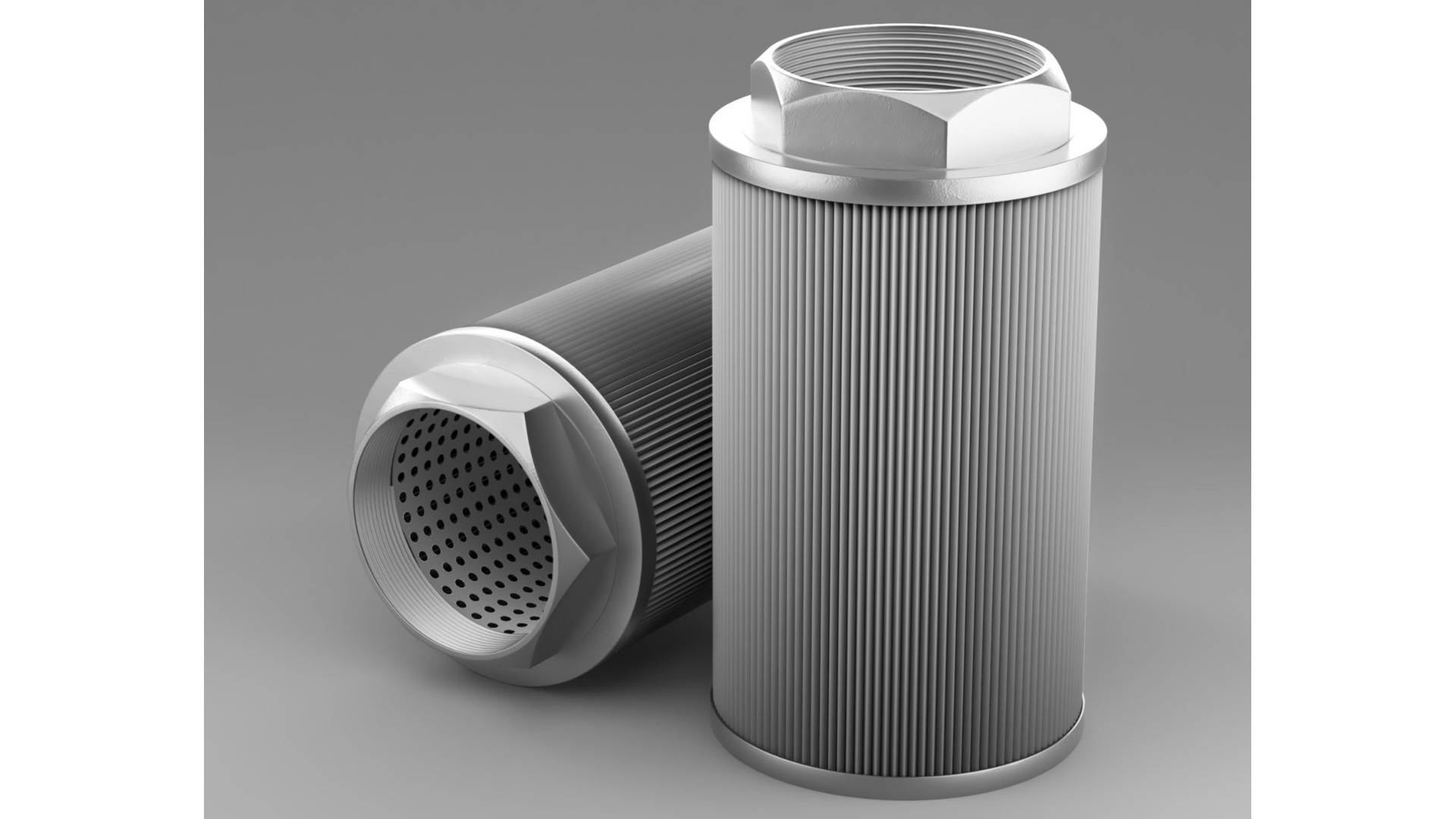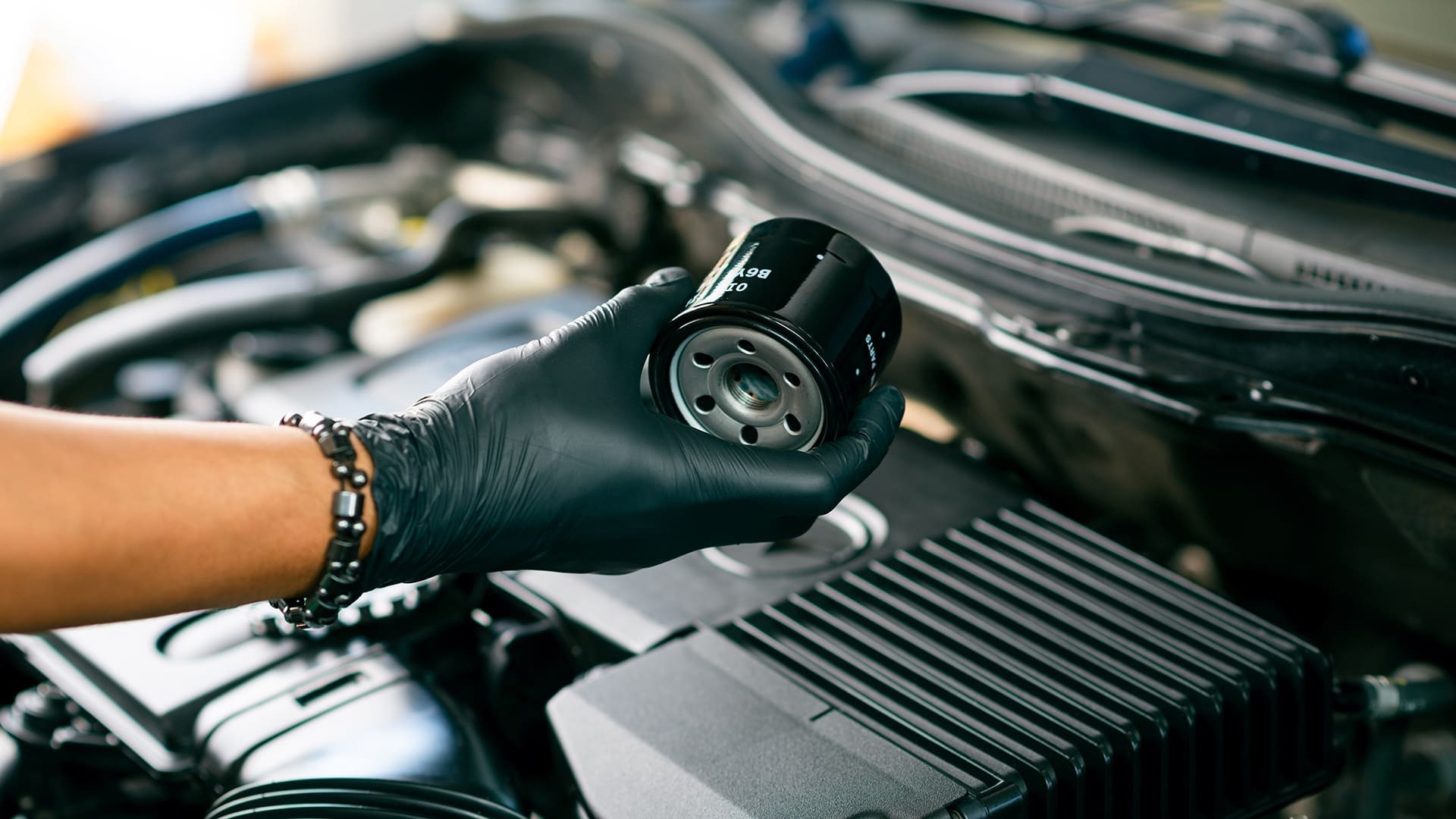
Your standby genset sits on a hospital rooftop in Al Barsha, a telecom shelter in Ruwais, or a data-centre yard in Dubai Silicon Oasis. When utility power drops, you have between 8 and 15 seconds to be online. The last thing between the day-tank and the injectors is a fuel filter. Get that filter wrong, wrong micron rating, wrong housing, wrong water separator, and the load transfer fails at exactly the moment nobody can afford it.
Short answer, up front. Choosing the right fuel filter for a UAE genset comes down to five variables: the engine OEM (Cummins, CAT, Perkins, MTU, Volvo), the injection system (mechanical, HEUI, or common-rail), the primary/secondary micron split (typically 10–30 µm primary → 2–5 µm secondary; common-rail as low as 2 µm nominal / 4 µm absolute), water-separation capability (Racor turbine or Fleetguard NanoNet), and confirmed OEM cross-reference. Match those five, source from authorized distribution, and you eliminate 90% of premature filter failures.
We stock the primary and secondary fuel filter lines for every major genset OEM sold in the UAE, Cummins (Fleetguard), CAT (CAT branded and Baldwin cross-reference), Perkins, MTU, Volvo Penta, and marine-grade Racor separation, with same-day dispatch from our Aweer warehouse. What follows is the practical decision framework we walk customers through every day.
Before you start, if you're maintaining a fleet of standby units through the summer load season, our diesel generator filter maintenance schedule for UAE summer covers the interval side of the equation.
Start with the engine OEM and injection system, not the part number
Everything downstream depends on this. A common-rail Cummins QSK50 running at 1,800 bar injection pressure has a completely different filtration requirement than a mechanical-injection Perkins 4008 from 2005. The parts catalog will happily sell you the wrong filter if you skip this step.
Common-rail engines (Cummins QSK, CAT C-series, MTU 4000, Perkins 4000 with common-rail) demand 2–4 µm secondary filtration. The Bosch Common Rail Guidelines and Denso injection-system service documents specify particle contamination limits at ISO 4406 class 18/16/13 or cleaner, miss that spec and injector nozzle wear accelerates fast, fuel dilution rises, and you end up replacing a AED 8,000 injector set instead of a AED 90 filter.
HEUI and older mechanical-injection engines are more forgiving, 10 µm secondary is often adequate. But "adequate" isn't the goal in a UAE standby application, because bunker-blended and re-refined diesel sourced through informal channels is dirtier than the OEM assumed.
Marine gensets on vessels or coastal facilities have their own layer, the water-separation stage matters more than the particulate stage, because bunker fuel picks up water through condensation and questionable storage. That's where the Racor turbine range earns its reputation.
Look up the engine OEM's parts manual first. Get the OEM part number for both the primary (upstream) and secondary (downstream) filters. Then decide on genuine vs. cross-reference, that's step two.
Understand the primary/secondary split: and why both stages matter
A lot of buyers try to save money by fitting only a secondary filter. It works for a while. Then the injector supplier stops answering their calls.
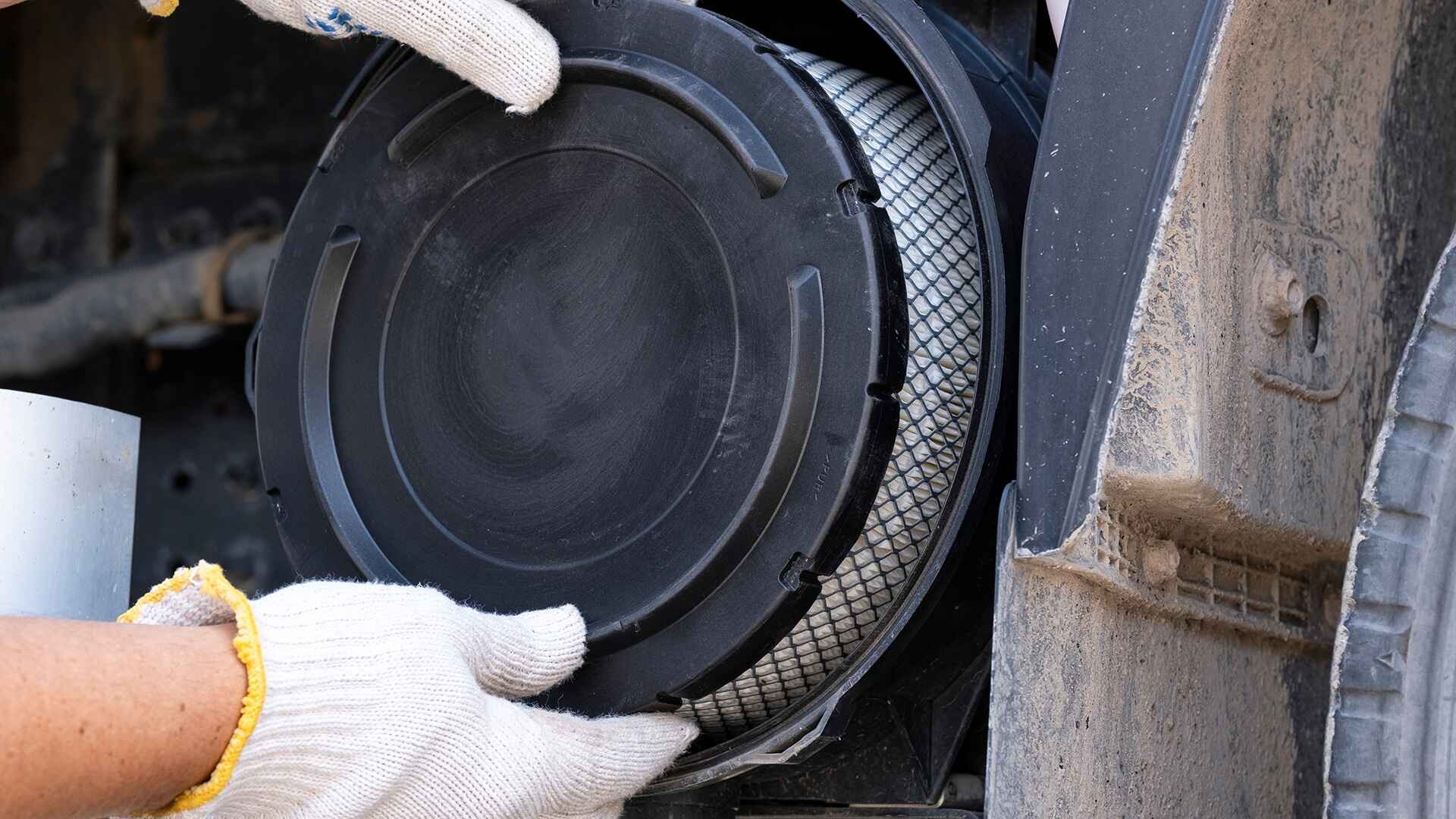
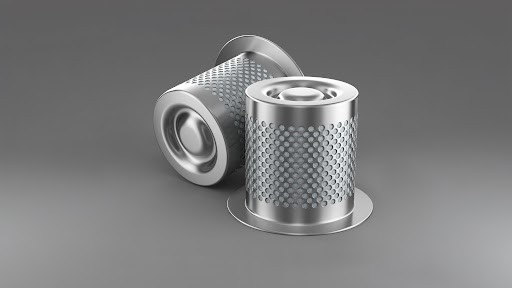
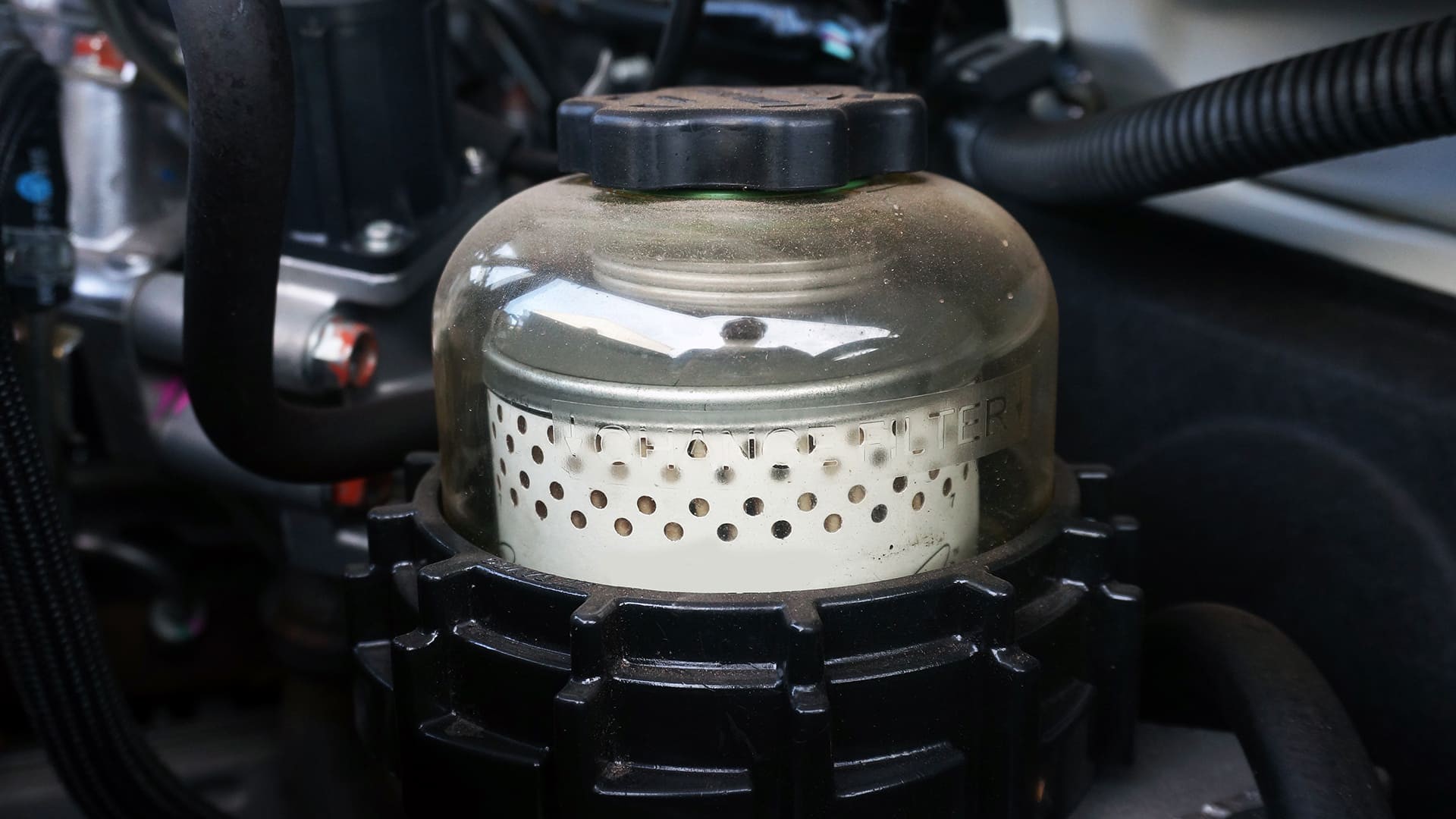
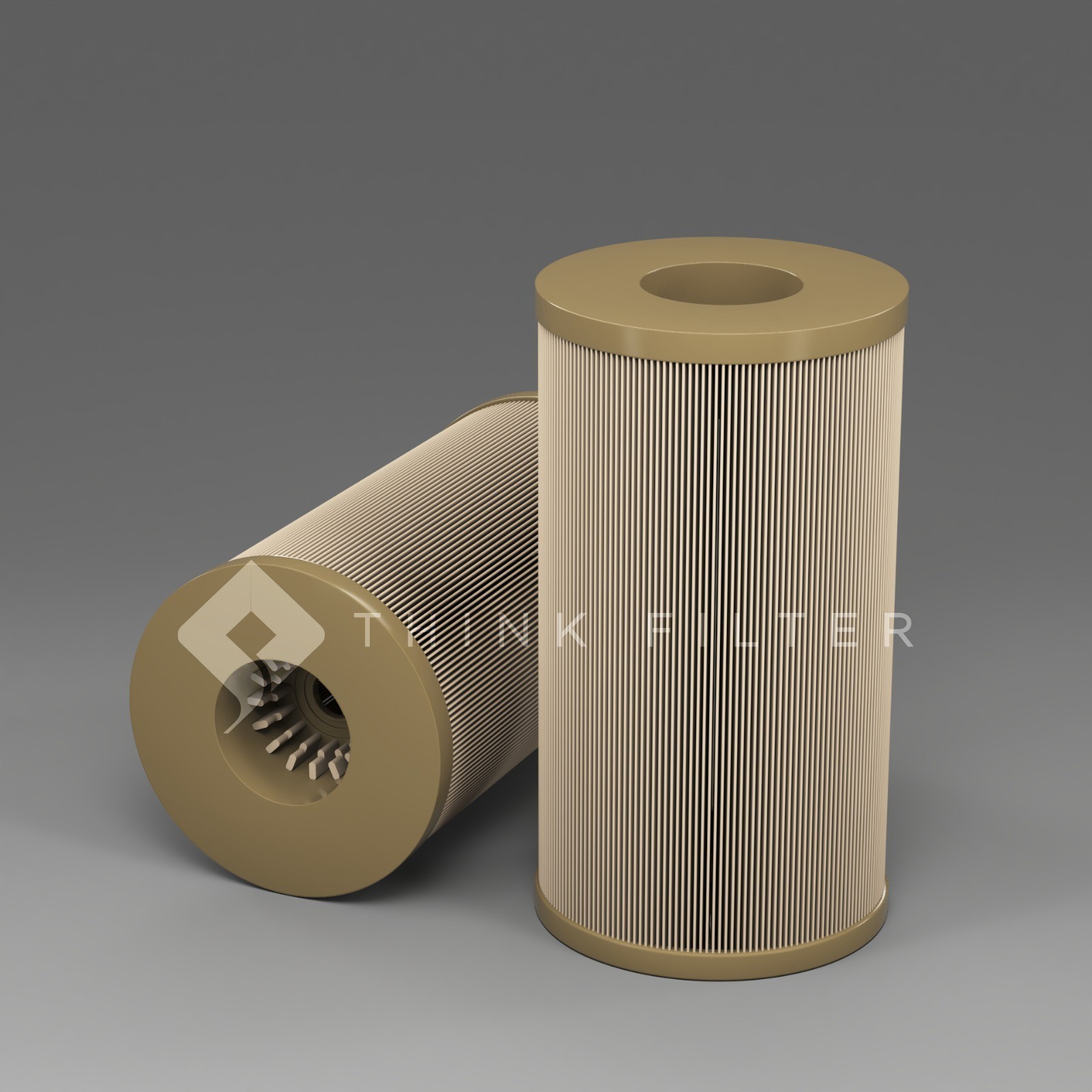
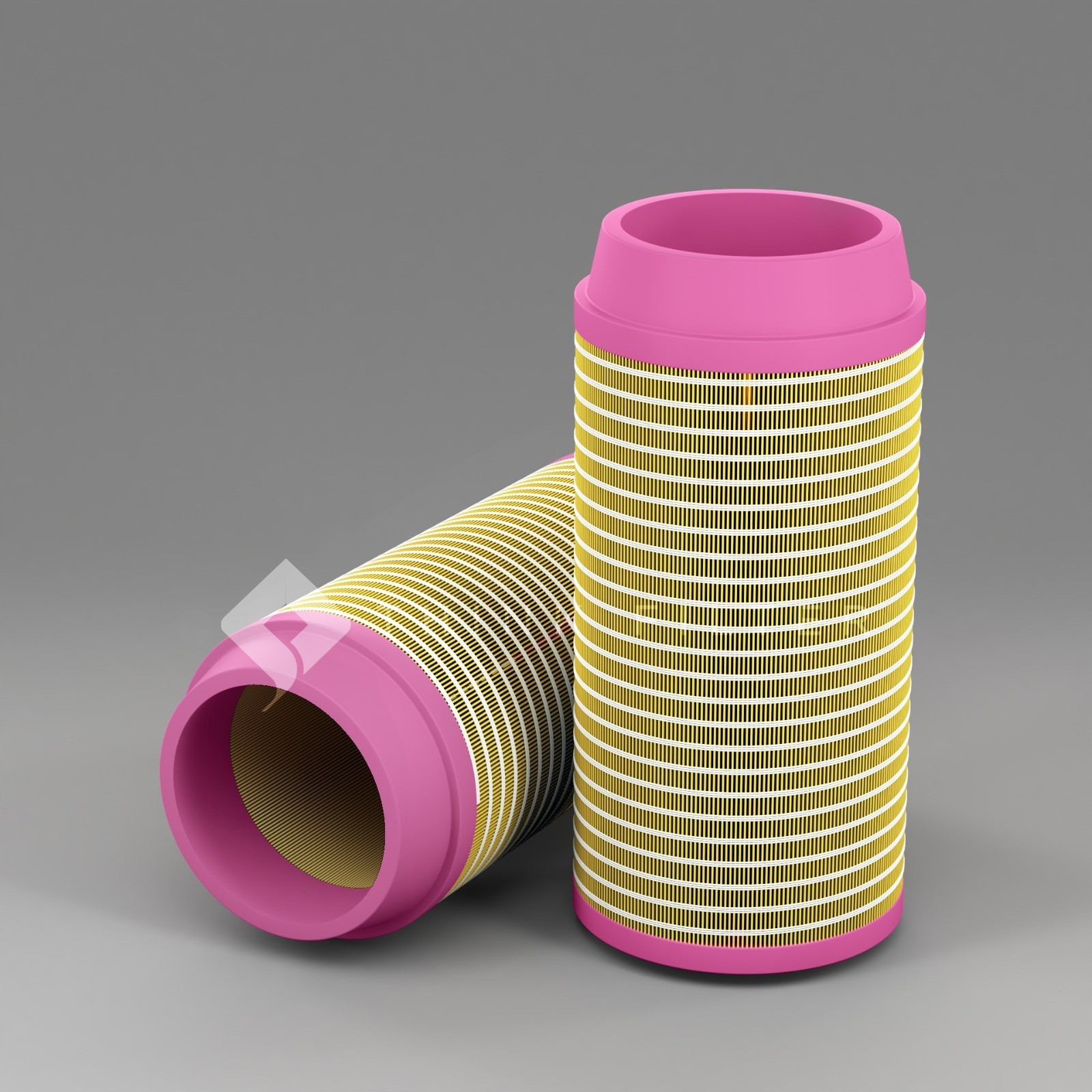
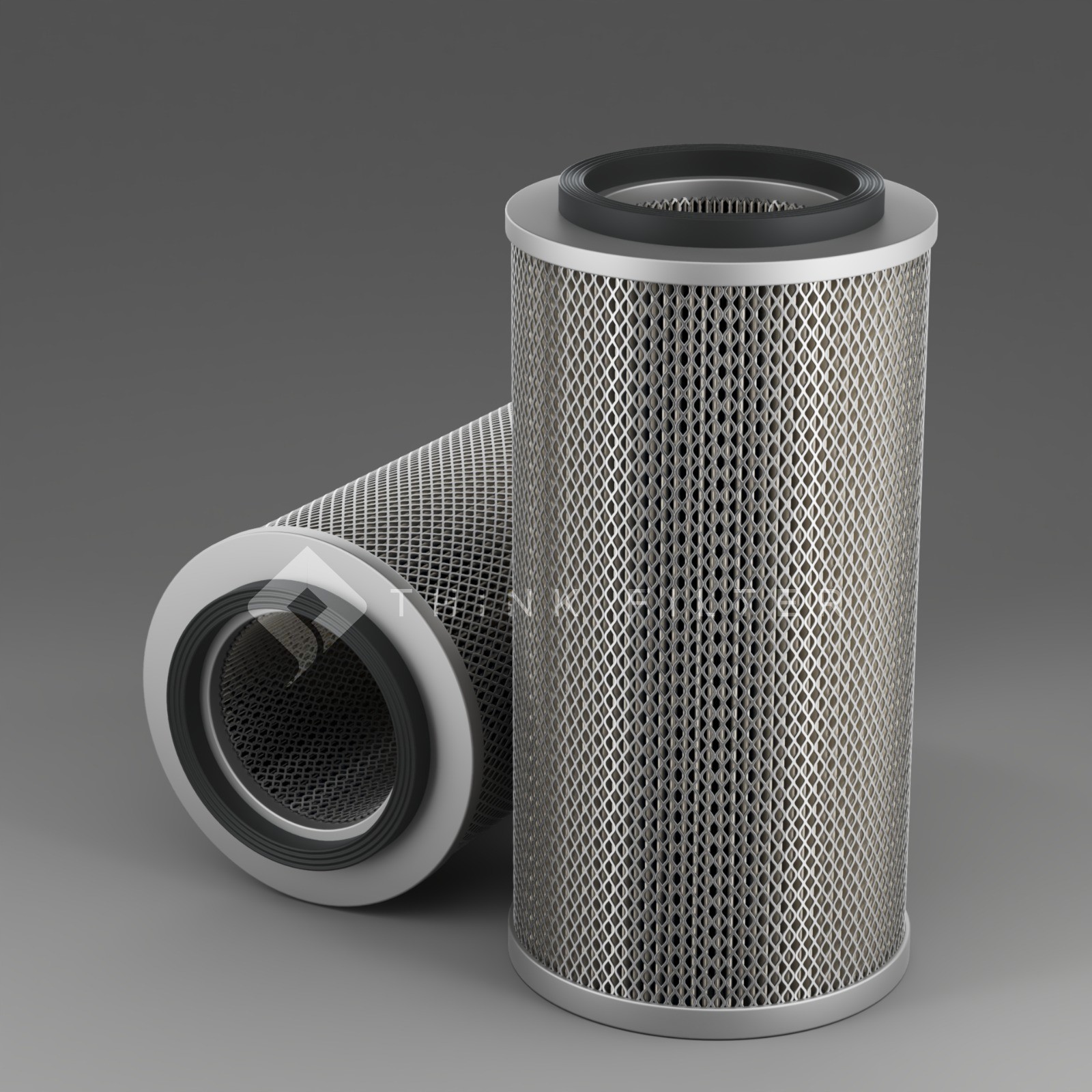
The primary fuel filter sits between the tank and the transfer pump. Its job is to catch coarse contamination, rust flakes, tank sludge, water, before the fuel hits the pump. Typical micron rating: 10 to 30 µm. This is also where water separation lives on most systems. Racor 500/900 turbines, Fleetguard NanoNet 3-stage, and Baldwin BF-series primaries all fit here.
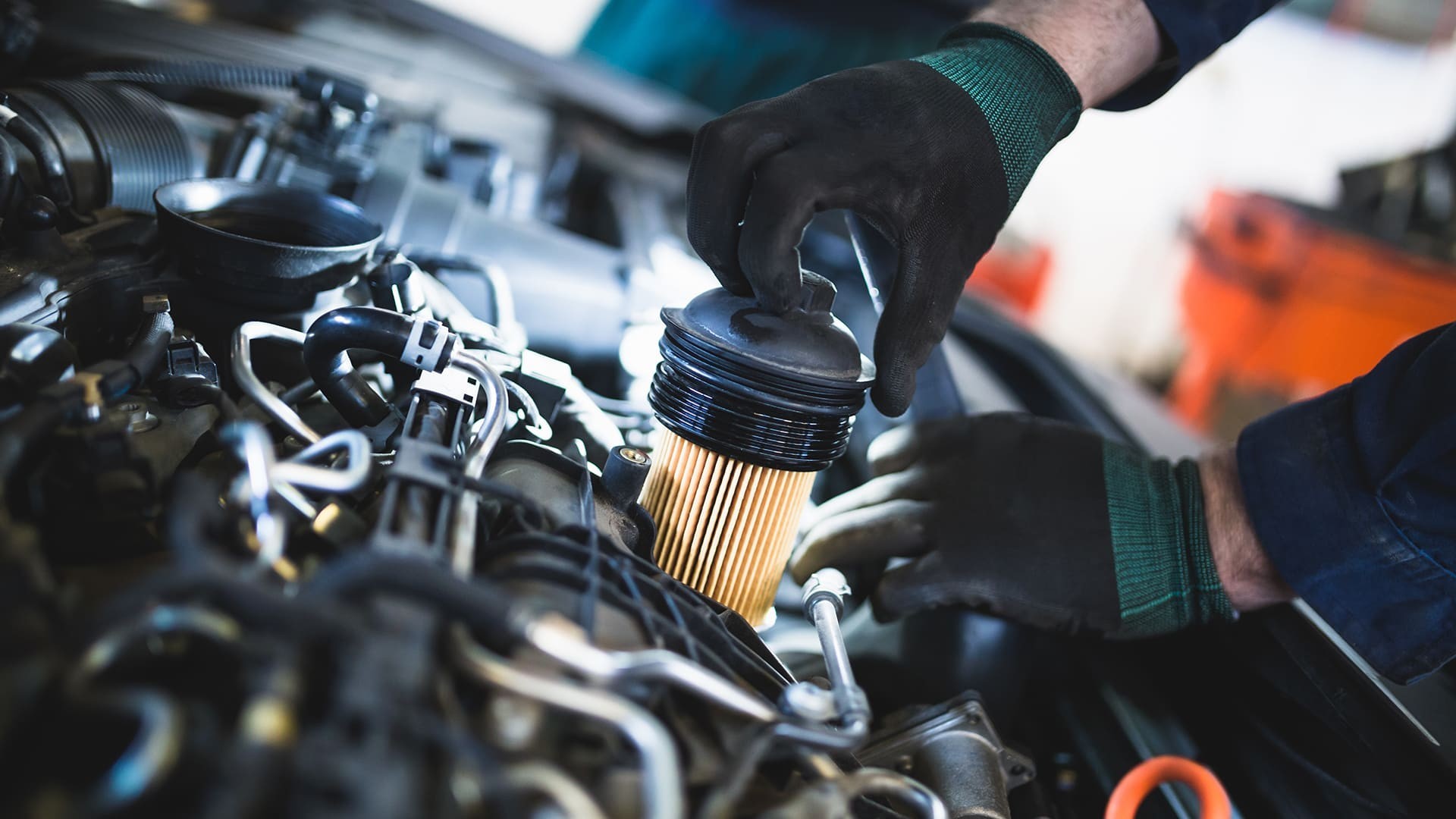
The secondary fuel filter sits between the transfer pump and the injection pump or common-rail. Its job is fine particulate removal, 2 to 5 µm on modern injection systems. Fleetguard FS series, CAT 1R-0750, and MANN PU series live at this stage.
Why both, always. Skip the primary, and your secondary loads up in a fraction of its rated life while water goes straight into the pump. Skip the secondary, and your primary can't catch the fine particulate that damages injector nozzles at 1,800 bar. The two-stage architecture is a design choice by the engine OEM. Respect it.
For a full primary + secondary set on a Cummins QSK genset, we typically ship a Fleetguard FS1000 (primary/water separator) + FF5320 or NanoNet FS19828 (secondary), cross-referenced from the Cummins Filtration catalog. Same-day out of Aweer.
Get the micron rating right for your injection system
Micron rating without context is a marketing number. What matters is beta ratio at a stated micron size: that's the ISO 16889 standard for fluid power, adapted informally in fuel-filter marketing.
- β₂ ≥ 200 (absolute 2 µm): what a common-rail secondary should meet. This is where genuine Fleetguard NanoNet, Bosch, and Racor Aquabloc lines sit.
- β₄ ≥ 200 (absolute 4 µm): acceptable for most Tier 3 common-rail secondaries.
- β₁₀ ≥ 75 (nominal 10 µm): typical primary rating.
"Nominal 5 µm" without a beta number is a soft claim. The filter might catch 50% of 5 µm particles, that's not "5 µm filtration" in any meaningful sense. Ask for the beta rating. If the seller can't produce it, the filter probably can't hit it.
For a Cummins ISX or QSX generator running Tier 4 emissions calibration, missing the secondary micron target by even a step can trigger fault codes, degrade after-treatment performance, and shorten injector life. The Cummins Service Bulletin CFB-C059 (available through authorized Cummins service channels) is explicit on this.
Don't underestimate water separation in the UAE
UAE diesel comes off tanker trucks, drops into buried steel storage tanks that see 45°C ambient and 20°C nighttime lows, and sits there long enough to accumulate condensate. Water in fuel is not an edge case, it's the base case.
What water does in an injection system. It destroys the lubricity of the fuel, corrodes the pump plungers, hydro-locks injectors, and, in common-rail, vaporizes into steam at injection temperatures, blowing out nozzles. Bosch's technical documentation says water content should stay below 200 ppm; most UAE storage tanks run higher without active separation.
How to size water separation. Two things matter: flow capacity (must equal or exceed engine fuel consumption at full load, with margin) and separation efficiency (typically ≥95% free-water removal). For a 500 kVA Cummins QSK19, the fuel flow is roughly 130 L/h at full load, a Racor 900FG or Fleetguard FS1000 comfortably covers that range.
For marine gensets and coastal fuel storage, step up to Racor turbine 900MAX or 1000MA with the Aquabloc media. That's the range we ship most often to Fujairah and Jebel Ali Port operators.
Choose OEM vs. authorized cross-reference deliberately
There's a real trade-off. Genuine OEM (Fleetguard on Cummins, CAT filters on CAT) protects warranty and guarantees exact spec match. Authorized cross-reference (Baldwin, Donaldson, MANN) can save 15–30% on parts cost, works well post-warranty, and standardizes inventory across mixed fleets.
When to stay OEM.
- Engine still under factory warranty.
- Emissions-tuned Tier 4 or common-rail engines where any drift in filtration spec risks fault codes.
- Critical-load standby (hospitals, data centres) where the marginal cost of OEM is trivial vs. a nuisance callout.
When cross-reference makes sense.
- Post-warranty fleets and older mechanical-injection engines.
- Mixed OEM inventory being consolidated on Baldwin or Donaldson for parts-room simplicity.
- Non-critical prime-power applications where you have technicians on site to diagnose any anomaly.
Every cross-reference we quote comes off the published Fleetguard, Donaldson, Baldwin, or CAT catalog, not a spreadsheet approximation. Bring us the OEM number, we return the equivalent with the beta ratio and media spec confirmed.
For the deeper story on when brand substitution pays off vs. costs, our oil filter replacement guide covers the same OEM-vs-aftermarket logic on the lubrication side.
Match filter housing, thread, and gasket: not just the number
Two filters can have the same nominal spec and refuse to fit each other. Check three physical parameters before ordering:
- Thread specification: commonly M16×1.5, M20×1.5, 3/4"-16 UNF, or 1"-14 UNF. Getting this wrong at 3 AM during a load-transfer failure is a special kind of frustration.
- Gasket outer/inner diameter: a gasket that's 2 mm off can seat and still leak under pressure.
- Bypass valve setting: spec'd in kPa or psi. Wrong setting means the bypass opens too early (dirty fuel bypasses filtration) or too late (media collapses under load).
The OEM catalog lists all three. Cross-referenced parts are only equivalent when all three match. This is why we insist on the engine OEM number, not a Google-image guess.
Storage, handling, and service intervals in UAE conditions
You bought the right filter. Now don't ruin it before it goes on the engine.
Storage. Keep boxed filters in air-conditioned inventory. Sitting on a warehouse pallet at 48°C degrades the adhesives and the elastomer gaskets before they ever see fuel. This is standard practice at any authorized distributor; it's not standard in the informal parts trade.
Handling. Don't pre-fill fuel filters on Tier 4 common-rail engines unless the OEM specifically allows it, pre-filled fuel bypasses the filter media on the way in and pushes unfiltered debris straight into the pump. On older mechanical engines, pre-filling is fine.
Service intervals. UAE ambient temperatures accelerate media aging. As a rule of thumb, shorten the OEM-recommended fuel filter interval by 20–25% in continuous-duty applications, more if the fuel source is questionable. On sandstorm days, the intake and crankcase ventilation loads spike too, coordinate a full filtration service package rather than swapping one element at a time.
For the full seasonal service plan across intake, oil, fuel, and coolant filtration on UAE gensets, our diesel genset summer maintenance guide has the interval matrix.
Frequently asked questions
What micron rating fuel filter does a Cummins QSK genset need? The secondary should hit β₄ ≥ 200 (4 µm absolute) or better, the Fleetguard NanoNet range covers this. The primary/water separator sits at 10–30 µm nominal. Cummins publishes the exact spec in the QSK service manual; the Fleetguard FS1000 primary and NanoNet FS19828 secondary are the standard fit.
Can I use a Racor filter on a Cummins engine, or does it have to be Fleetguard? Racor is Parker's brand and is widely used as the primary water separator on Cummins marine and industrial applications, Cummins even factory-fits Racor on some marine packages. For the secondary, Fleetguard is the OEM spec. Racor at the primary stage and Fleetguard at the secondary is a common, fully OEM-compatible combination.
How often should I change the fuel filter on a UAE standby generator? Follow the OEM's hours-based interval as a ceiling, but shorten it by 20–25% for UAE summer duty. For a Cummins QSX standby that runs monthly test cycles and occasional load events, most operators change fuel filters every 250 operating hours or annually, whichever comes first. If the water bowl fills between changes, drop the interval further.
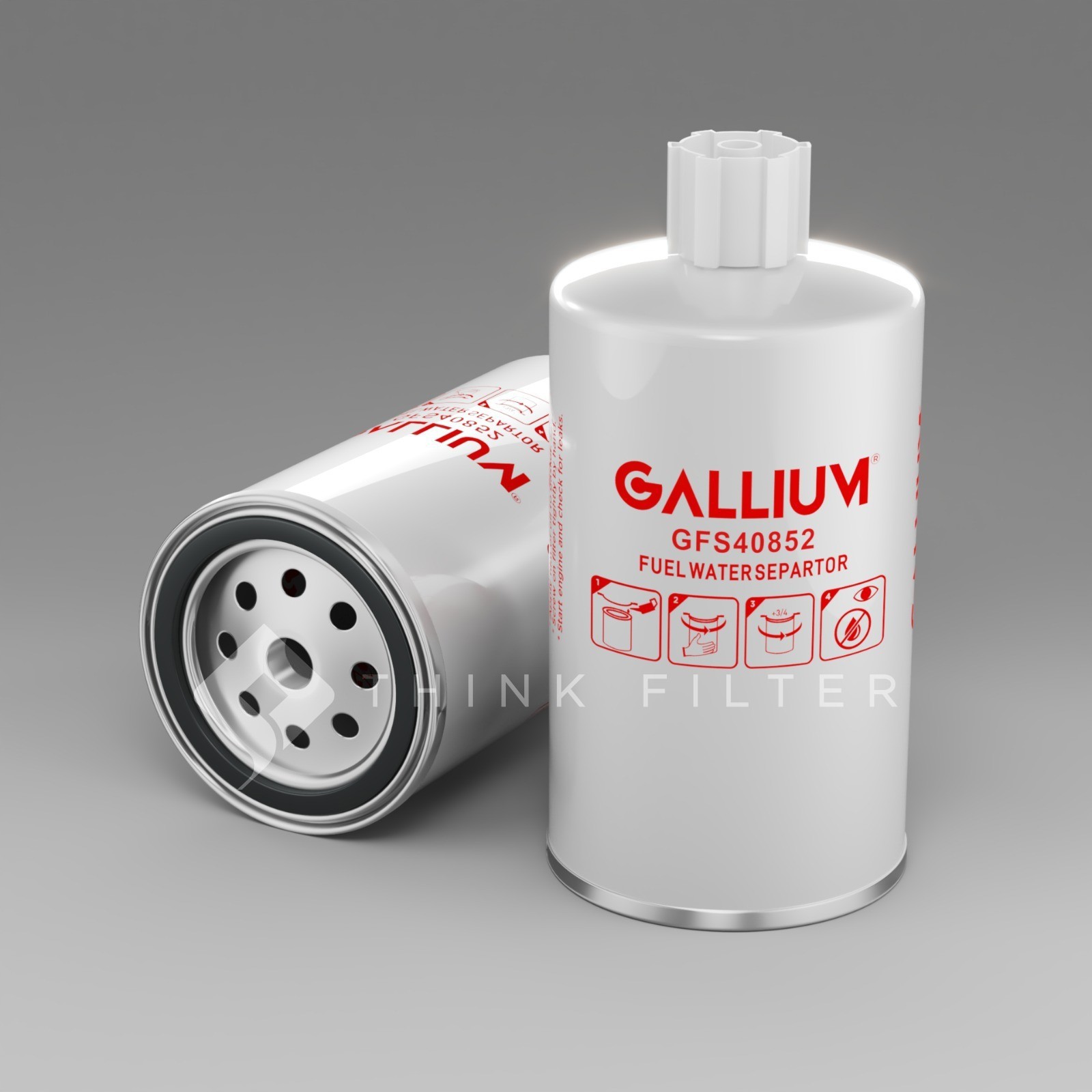
What's the difference between a fuel filter and a fuel-water separator? A fuel filter removes particulate. A fuel-water separator removes free water in addition to particulate. On modern gensets both functions are usually combined at the primary stage, the Racor turbine and Fleetguard NanoNet ranges are both filters and water separators. A pure fuel filter without water separation is only appropriate downstream, as the secondary stage.
Are aftermarket fuel filters safe for a Tier 4 common-rail generator? Yes, when they come from an authorized cross-reference (Baldwin, Donaldson) with a published beta rating that matches the OEM spec. What's not safe is unbranded or grey-market filters with no beta data, those often miss the 2–4 µm absolute target and damage injectors within a few hundred hours.
What water content is acceptable in generator diesel fuel? Bosch and most engine OEMs specify below 200 ppm dissolved water for common-rail systems. Free water should be zero at the pump inlet. In UAE conditions, a two-stage water separation setup (primary Racor or Fleetguard NanoNet + regular tank sump draining) is the practical target.
Can I skip the primary filter if I have a good secondary? No. The secondary is designed to see pre-cleaned fuel. Skipping the primary loads the secondary with coarse contamination and water, which collapses the fine media prematurely and pushes water straight into the injection pump. The two-stage architecture is not optional on any modern engine.
Author
Meera Ajesh is a filtration technical specialist with 12 years in heavy-duty aftermarket parts across the GCC. Handles cross-referencing and technical sizing at ThinkFilter's Aweer warehouse.
Sources: Bosch Common Rail Guidelines for fuel quality and filtration; ISO 4406:2021 solid contamination code; ISO 16889:2022 multi-pass filter test method; Cummins Service Bulletin CFB-C059 (via authorized Cummins channels).







 Facebook
 Instagram
 LinkedIn