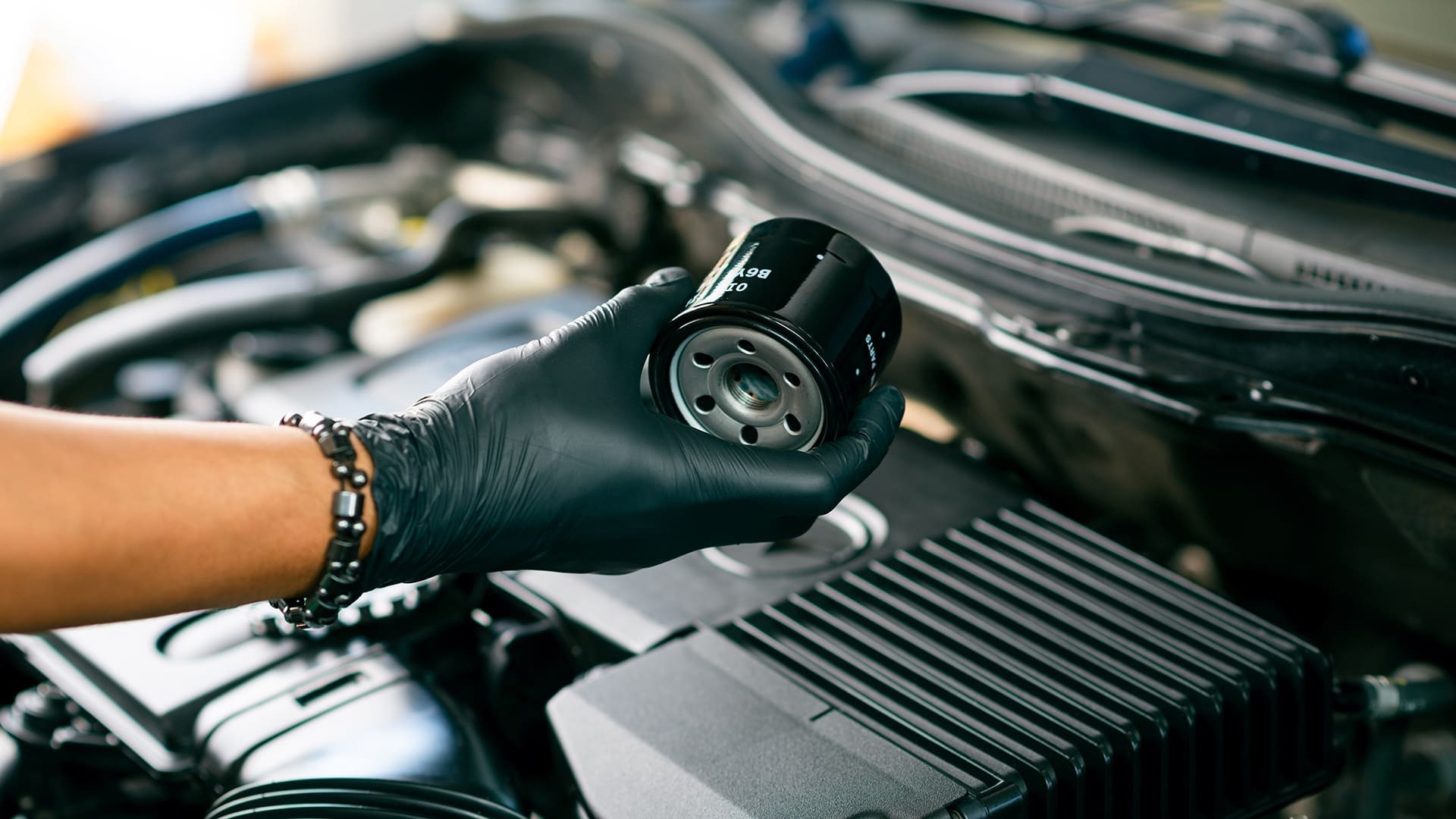
Quick answer: Cellulose media wins on price and works fine for standard duty cycles with clean fuel and moderate dust. Synthetic media, meltblown polyester or polypropylene, wins on service life, moisture handling, and pulse fatigue. In UAE fleet, marine, genset and hydraulic applications, synthetic pays back when service intervals stretch beyond 500 engine hours, when the operating environment includes water contamination, or when a shutdown for a filter change costs more than a case of premium filters. Both media families are stocked as authorized inventory at our Aweer warehouse and cross-referenced from the OEM catalog. Fleetguard StrataPore and NanoNet sit on the synthetic side of that split. See Fleetguard filters in the UAE for the SKUs we actually hold.
What cellulose filter media actually is
Cellulose media is essentially treated wood pulp, long, irregular fibres, resin-impregnated for stiffness and temperature resistance. It's the default media in most low- and mid-tier oil, fuel and air filters worldwide because it's cheap, biodegradable and works well enough for most standard-duty applications.
The strengths are real: cellulose loads dirt through depth, so contaminant capacity per gram is decent. It handles typical engine oil chemistry without issue. It's easy to make at scale. Roughly 70% of aftermarket oil filters sold in the GCC still use cellulose or cellulose-blend media, based on 2023 MEED industry data.
The weaknesses are also real. Cellulose swells when it absorbs water, a problem for humid coastal air on Fujairah anchorage and for any fuel system running biodiesel blends. It softens above 90°C sustained, which matters on turbocharged engines. And its fibre geometry is inconsistent, so the micron rating drifts as the filter loads.
What synthetic filter media actually is
Synthetic media is engineered from polymer fibres, most commonly polyester (PET) or polypropylene (PP), extruded via meltblown or spunbond processes. Fibre diameter and orientation are controlled, so beta ratios and micron ratings hold steady across a wider dirt loading curve.
Fleetguard StrataPore, Donaldson Synteq, MANN Multigrade Synthetic and Baldwin PurePath all sit in this category. They cost 30% to 80% more than equivalent cellulose per unit, but the specs justify it in specific use cases: fuel filters on high-pressure common rail engines, hydraulic return-line filters targeting ISO 4406 18/16/13 or cleaner, and air filters on equipment operating in the Sajaa dust corridor.
Synthetic doesn't wick water. It doesn't collapse in high pulse pressure. It doesn't shed fibres into the fluid stream. That last point matters especially for hydraulic systems, where fibre shed from cellulose has been implicated in servo valve failures on excavators.
When cellulose is the correct pick for a UAE application
Not everything needs synthetic. Cellulose is the right choice when:
- The equipment runs a standard duty cycle with regular scheduled service.
- Fuel is clean ULSD from a known supplier, not biodiesel or dubious drum stock.
- Oil change intervals stay inside the OEM recommendation (usually 250 to 500 hours or 15,000 to 30,000 km).
- The application isn't marine, isn't in a sandstorm zone, and isn't running above 90°C sustained oil temperature.
- Filter cost across a fleet is a real budget line and the extra life of synthetic doesn't recover the price gap.
Small fleets running late-model Volvo, MAN or Scania tractors on paved intercity routes between Dubai and Abu Dhabi often do fine on cellulose. Same for standard hydraulic circuits on light-duty forklifts.
When synthetic pays back the extra cost
Synthetic earns its price in five specific scenarios common in the UAE:
- High-pressure common rail diesel systems. Bosch and Denso 2,200 bar-plus injectors demand better than 4-micron absolute filtration. Cellulose can't hold that spec as it loads.
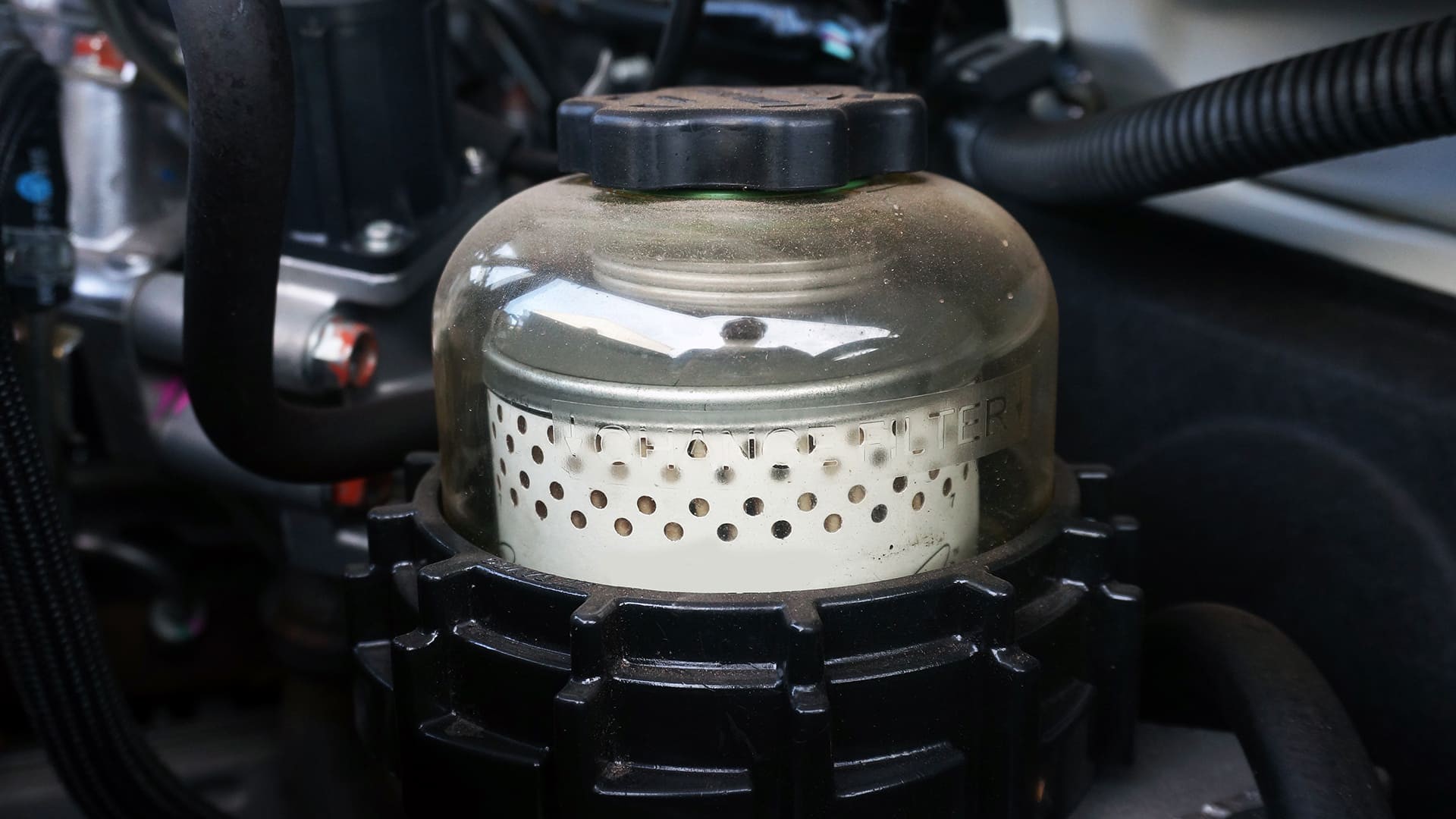
- Marine fuel and fuel-water separation. Water is always present. Cellulose swells and blocks flow before dirt loading even matters. See the marine filtration systems guide.
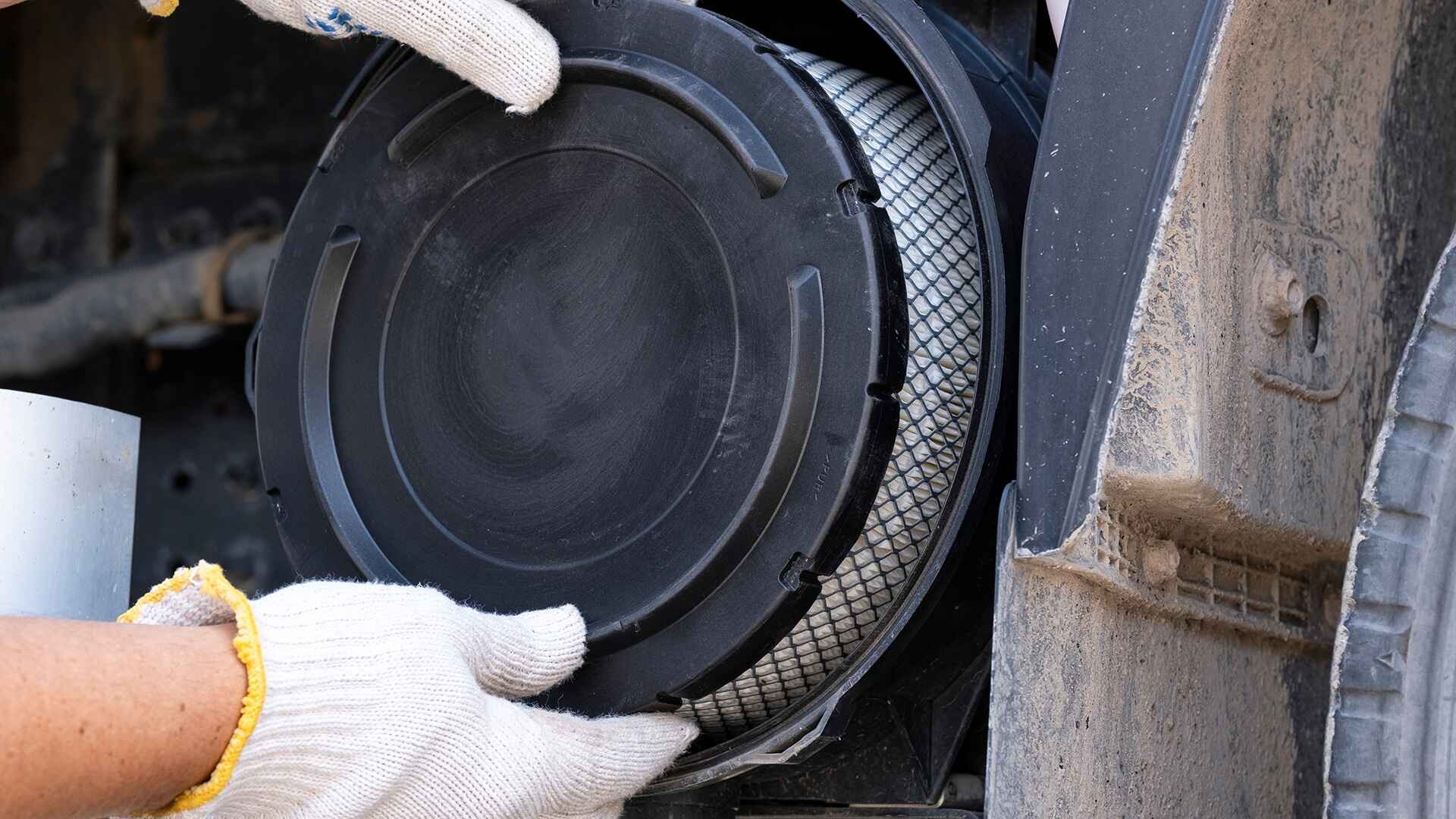
- Sandstorm-zone air filtration. Dust concentrations during shamal events overwhelm cellulose within a single shift. Nanofiber-composite synthetic doubles or triples service intervals on quarry and construction equipment.
- Extended service interval programs. If a fleet has moved oil drain intervals to 40,000 or 50,000 km on synthetic engine oils, the filter has to match. Cellulose can't reliably.
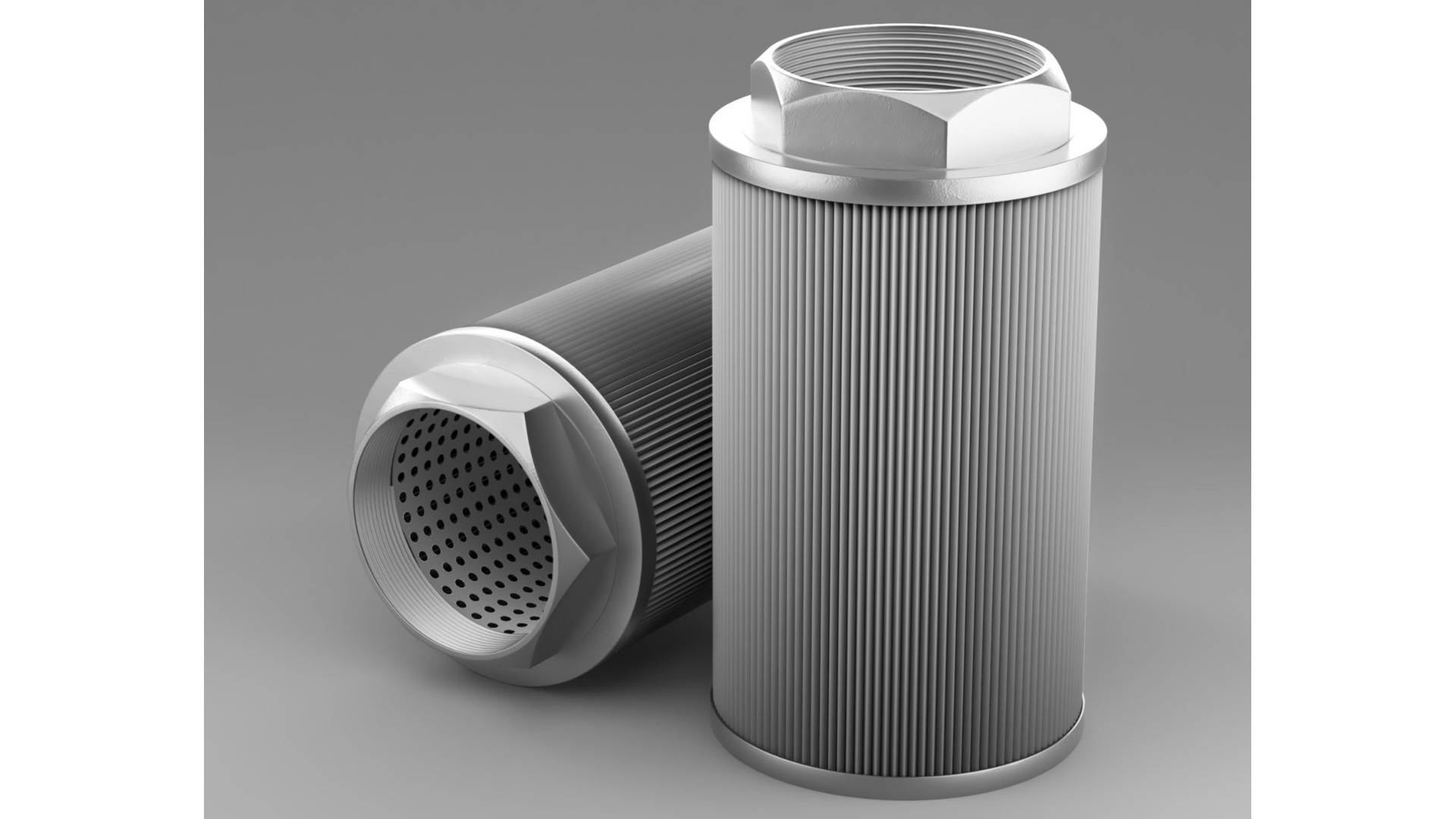
- Hydraulic systems targeting ISO 4406 cleanliness codes tighter than 18/16/13. Synthetic-glass composite media is the practical option.
How the two compare on real efficiency numbers
The beta ratio is the honest comparison tool. Beta 200 at a given micron size means 199 out of 200 particles at that size are captured, 99.5% efficiency. Beta 1000 is 99.9%.
Typical cellulose oil filter media rates around beta 20 at 20 microns, decent but not tight. A synthetic equivalent from Fleetguard StrataPore rates beta 200 at 10 microns and beta 1000 at 20 microns. That's an order-of-magnitude improvement on fine particle capture.
For hydraulic media, the difference gets more dramatic. Hydac Betamicron 4 synthetic-glass hydraulic media holds beta 1000 at 3 microns across its entire life. A cellulose hydraulic element would degrade to beta 20 at the same size well before service replacement. The micron rating explainer walks through the maths.
What UAE conditions do to each media type
The specific stresses in this region are dust, heat, humidity and biodiesel blend variability.
- Dust. Cellulose depth-loads until the pleats collapse or bypass opens. Synthetic surface-loads and holds pressure drop lower for longer.
- Heat. Cellulose softens above 90°C sustained; resin-impregnated variants push that to 105°C. Synthetic PET tolerates 120°C, PP handles 90°C, polyester composites reach 150°C.
- Humidity. Coastal humidity in Ras Al Khaimah and Fujairah reaches 90% year-round. Cellulose wicks moisture, swells, and blocks flow. Synthetic ignores it.
- Biodiesel and unstable ULSD. Fatty acid methyl esters attack cellulose resin binders. Synthetic media is unaffected.
Yousef Al Hosani, a chief engineer running six standby gensets across an Abu Dhabi hospital campus, described the switch in a 2024 case study interview: "We moved to Fleetguard StrataPore on the fuel-water separators after two summers of nuisance shutdowns. Zero water-related alarms since."
Which brands to specify by application
Working from the counter at the Aweer warehouse, here's the pattern we see for cross-reference requests:
- Oil filters: MANN Multigrade Synthetic and Fleetguard StrataPore for extended-drain fleets. Standard cellulose from MANN, Baldwin or Fleetguard for scheduled-service fleets. Full range on our MANN filter page.
- Fuel and fuel-water separators: Racor synthetic on marine, Fleetguard NanoForce on Cummins, Donaldson synthetic on CAT.
- Air filters: Donaldson Ultra-Web nanofiber on construction and mining. Cellulose Baldwin on light-duty on-highway.
- Hydraulic: Hydac Betamicron glass-synthetic on excavators and injection moulding. Parker Microglass on mobile equipment.
All held as authorized inventory, cross-referenced from the OEM catalog, dispatched same-day.
FAQ
Which lasts longer, synthetic or cellulose? Synthetic media typically lasts 1.5 to 3 times longer than equivalent cellulose in the same application, based on published beta-ratio-versus-life curves from Donaldson and Fleetguard. The exact ratio depends on contaminant loading and duty cycle. Very light-duty applications see less separation; heavy-duty and dusty applications see the widest gap.
Is synthetic media always the right choice for hydraulic systems? Almost always, yes. Cellulose sheds fibres that can damage servo and proportional valves. Modern hydraulic systems targeting ISO 4406 18/16/13 or cleaner effectively require synthetic-glass composite media. Very light-duty return-line filters on legacy equipment may still use cellulose safely.
Can I mix media types across the same fleet? Yes, and most UAE fleets do. Air filters may run synthetic nanofiber while oil filters remain cellulose, depending on cost-benefit for each. What matters is consistency within a single filter housing, don't rotate media types on the same unit without documenting the change interval accordingly.
Does synthetic media void OEM warranty? Not when the cross-reference matches or exceeds the OEM's published efficiency and bypass specifications. Most engine and equipment OEMs list acceptable alternate media types in their service bulletins. Confirm before switching a unit under warranty.
How do I know if a filter uses synthetic or cellulose media? The OEM part datasheet lists media type. Visually, synthetic media is uniformly white or off-white with a smooth surface. Cellulose is typically tan or grey and shows visible fibre texture. Nanofiber composite looks like cellulose from the outside but has a white nanofiber layer on the clean side of the pleat.
Are synthetic filters in stock in the UAE for same-day dispatch? Yes. Fleetguard StrataPore, MANN Multigrade Synthetic, Donaldson Synteq, Baldwin PurePath and Hydac Betamicron are all held as authorized inventory at the Aweer warehouse. Same-day dispatch covers Dubai, Abu Dhabi, Sharjah, Jebel Ali, Sajaa, Al Ain and Mussafah.
Sources
- Donaldson Filtration Solutions technical bulletin, Synteq XP media (2022).
- Fleetguard StrataPore data sheet, Cummins Filtration Technical Library.
- ISO 4406:2021 : Hydraulic fluid power fluids: coding method for particulate contamination.
- MEED GCC filtration market outlook, 2023 edition.
Meera Ajesh is the Chief Operating Officer at ThinkFilter, the authorized stockist and distributor of OEM and aftermarket filtration in the UAE.








 Facebook
 Instagram
 LinkedIn